Blog
The Giant Wheel That Time Forgot
By TT Travel • 1793723440
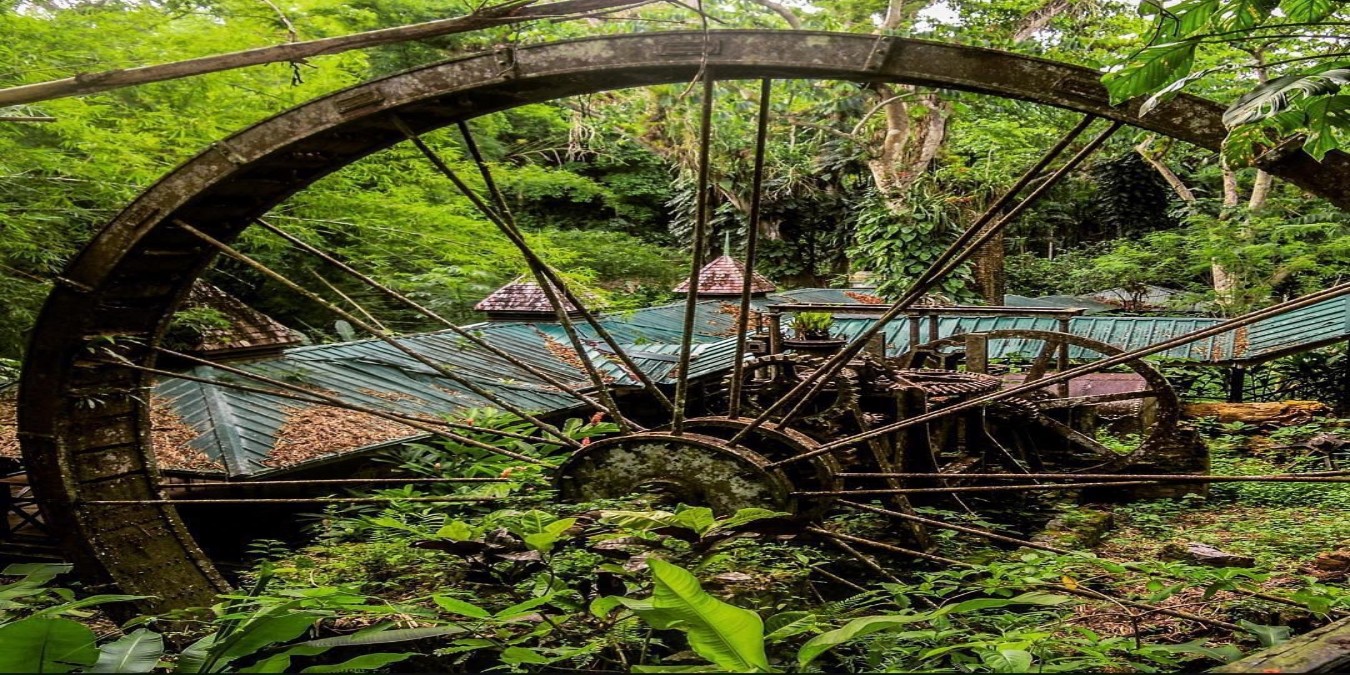
Deep in the emerald heart of Arnos Vale, Tobago, a giant iron wheel rises from the jungle like a forgotten sculpture.
Thirty-two feet of Scottish steel, spokes reaching skyward through vines and giant leaves, still stands where it once powered an entire sugar world. This is the Arnos Vale Waterwheel, one of the most complete pieces of 19th-century industrial archaeology left in the Caribbean.
The story begins in 1768, when British planters claimed these fertile slopes. The first wheel was wooden, sunken in a pit, driven by water carefully channelled from a dammed spring high on the hill. In 1857, a new iron giant arrived from the workshops of W. & A. McOnie in Glasgow. An overshot wheel of remarkable precision, it turned three massive vertical rollers that crushed cane five times over, feeding the boiling houses that produced sugar, molasses and rum. At its peak, the estate worked more than 200 enslaved people and turned out around 70 tonnes of sugar a year.
Beside the wheel you can still see the steam engine and boiler that backed it up when the water ran low, the foundations of an earlier windmill, the aqueduct ruins, and the heavy gearing that once made the whole complex roar. Nature has long since reclaimed the site; the buildings are half-swallowed, the metal is mottled with lichen, and the forest presses in from every side, yet the wheel remains stubbornly upright, a quiet monument to ambition, labour, and the forces that shaped Tobago.
Today the old estate is a place of stillness and birdsong. Motmots flash through the canopy, hummingbirds work the wild flowers, and the only sound is the same stream that once turned the wheel. It’s history you can walk through, touch, and feel.
Have you stood in the shadow of the Arnos Vale Waterwheel?
What’s the most powerful piece of Tobago’s plantation past you’ve ever seen?
Drop your stories, photos or memories below; we’d love to hear them.
Tag someone who needs this on their Tobago heritage list.